
Dixon Lake Fish Report for 11-17-2025
Dixon Lake Fishing Report
Dixon Lake - Escondido, CA (San Diego County)
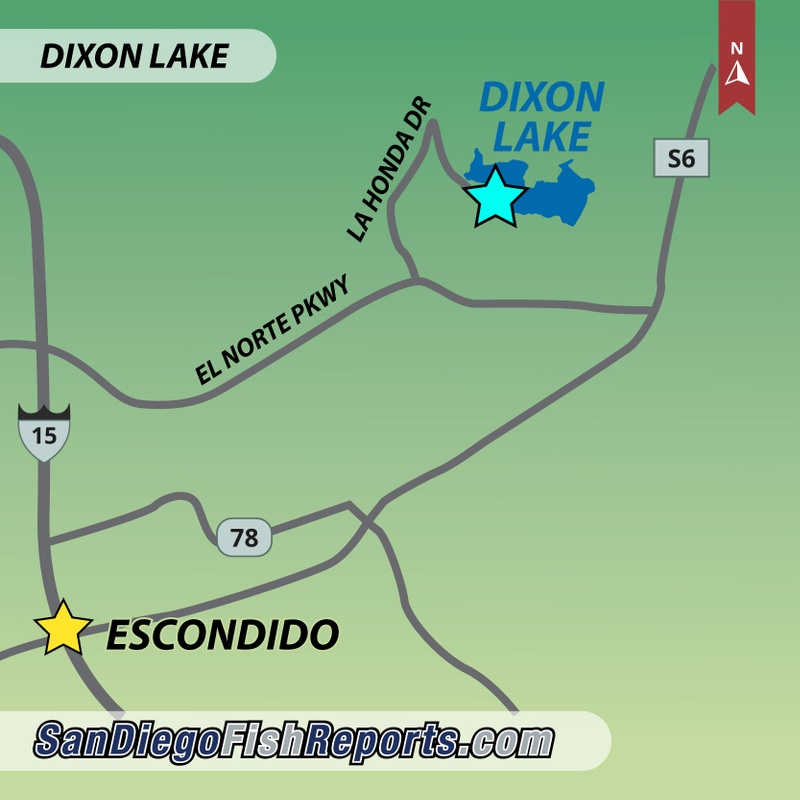
by Dixon Lake Staff
11-17-2025
(760) 839-4680
Website
- Date: November 17, 2023
- Park Hours: 6 am to 5:30 pm
- Dock Closes: 4:30 pm
- Boat Rentals End: 3:30 pm
- Last Plant: 1,000 pounds of Catfish: August 11th
- Next Plant: Trout season opener December 2nd. 4,000 pounds of trout per stock. Stocks will continue throughout trout season.
- Water Temperature: At surface: 64.94°F
- At 15 Feet: 64.94°F
- Dissolved Oxygen: At surface: 7.67 milligrams per Liter
- At 15 Feet: 7.55 milligrams per Liter
- Water Level: Moderate
- Water Clarity: Good (11 feet)
CA state fishing licenses are not valid nor required at Dixon Lake. Single day permits must be purchased at Dixon Lake Concession Stand. Rangers strictly enforce the required fishing permits and fresh water regulations.
There is a ban on private water craft and equipment at this time. Restricted equipment includes: private boats, canoes, kayaks, float tubes, trolling motors, fish finders, anchors, and any other equipment that contacts the water. Swimming is also prohibited.
Fishing permits, boat rentals, bait, and tackle are all sold at the Concessions Stand right next to the Ranger Station in the Lakeshore Area. Anglers "Must!" purchase a fishing permit before casting.
Fees
- Adult Permit (16 years and older): $9
- Senior Permit (over 60 years): $6
- Youth Permit (8 to 15 years): $6
- Child (under 8 years): Free
If you desire to fish with a second pole, make sure to pick up a second-rod permit for an additional $3.
Types of Fish
Catfish: Lately, Anglers have generally only been catching a few medium-sized catfish at a time. Rangers have come across several significant catches in the past few weeks. Catfish are nocturnal scavengers, so the best time for them is either early morning or around sunset, however good bait and patience can snag you a couple at any time of the day. Catfish scavenge for food by detecting its scent in the water (their barbels [the whisker-like appendages] are excellent in doing so), so any smelly bait works great on them! The stinkier the better! Many anglers have had success using cut-up mackerel (especially dipped in hog's blood), chicken liver, shrimp, and the classic nightcrawler. More offbeat, yet successful, bait has included hotdogs either soaked in Kool-Aid or by themselves. You might also try soaking your bait in garlic oil the night for a day or so prior to fishing. Catfish are a benthonic species (they live primarily near the bottom), because of that, any rig setup that can get the bait near the lake bed is a good idea, so make sure to have decently heavy weights for your rig (a drop shot rig for catfish minimizes the risk of snags). Catfish Cove, Whisker Bay, and near the buoys (typically the middle of them) are our usual great spots to catch cats. Recently, Whisker Bay seems to be bringing about the most action. Reminder: Catfish are limited to 5 per permit!
Largemouth Bass: The heat waves of summer have dwindled. There will be a short window though between the stubborn heat leaving and winter's chill moving in that bass should be plentiful as they start to hunt more to prepare for winter. Swimbaits are commonly used here for bass, Senkos and Roboworms are the usual, but any swimbait will do if you know how to work them properly. Color-wise for swimbaits, purple continues to be a popular color this year, and I've been told once when you don't know what color to throw, throw out something black. Topwater baits are also a fine choice, whether you use a rat or frog, you should see nice results using them. Dropshots and Texas rigs are excellent setups to use, Texas rigs especially if you're fishing in the algae (do keep in mind that if you're going to be casting into algae, having a heavier line will help reduce line breaks, you don't want to lose that whopper on the other end! But our fish are as smart as our waters are clear, so if your line is too heavy, I don't think you'll fool the bass of Dixon.). Largemouths are ambush predators, meaning they like to hide in and around structures and heavily grown algae beds, waiting for a tasty snack to swim by before striking. While bass can be found anywhere in our lake, casting perpendicular to the edge of the cover, whether it be any of the piers, near algae, or tules is always a good recommendation. However, going straight through/above the algae beds is also a fruitful tactic (Texas rig!). Reminder: Bass are limited to 2 per permit, and must be at least 12 inches to keep!
Bluegill: In the same family as bass (Sunfish [or Centrarchidae]), Bluegill are also coming out of the deep as surface temperatures start to become cooler to feed for winter. Hot spots for bluegills are the dense algae beds (try to look for any open spots in said beds, it's a great place to drop your line with a bobber attached), near and in the tules, around natural structures (such as rocks or sunken trees) and of course right beneath our any of our piers. Bluegill fishing is timeless fun for all ages, and as such they are a great fish to teach newer anglers if you're looking to take the little ones out for a great time at the lake! Bluegill rigs are as simple as they come, have your hook on the bottom, some/a light weight(s) about a foot or so above, and a bobber starting off at about a foot away from the weight, keep in mind you'll most likely will need to move the bobber up or down your depending on where the gills are at in the water column. While you can use small lures such as plastic minnows and small jigs, I always recommend either meal/red worms or cut-up nightcrawler on about a size 6 hook. Bigger live baits/hooks can land bigger bluegills, just be careful, the small ones can and will take your bait leaving you with just a bare hook! Pier 1 is where most of our bluegill fishers go, it's an easy walk with a lovely view of the lake, not to mention 3 benches there to laze away the day while waiting for that monster gill to come by. Reminder: Bluegills are limited to 25 per permit and cannot be used as bait!
Trout: Trout season is almost upon us! Trout stocking and fishing will begin December 2nd and don't forget to try your hand at the Trout Derby 2nd-3rd! Check-in at the Concession Stand or call Dixon Lake for more information regarding pricing and prizes. Anglers swear by differing trout-catching methodologies, but it is generally recommended to use live bait (minnows, nightcrawlers, salmon eggs) with a slip bobber and a split shot during the cooler months of the year when trout are feeding in the upper portions of the water column. Switch to a bottom rig when water temperatures rise. Bucktail jigs can be effective when going for trout in deeper water. Reminder: Trout are limited to 5 per permit and cannot be released after being caught!
For more information on park rules, future stocking schedules, and other information, please call the Dixon Lake Ranger station at 760-839-4680, or visit the Dixon Lake website. View the Dixon Lake Facebook page.
More Reports
Dixon Lake Fishing Report
Dixon LakePark hours: 6:00 AM –6:30PM (Vehicles/persons in the park after hours subject to citations). Updated park hours are always visible on entrance sign. Day Use Dock closes (boats called in): 5:15 P.M. Boats rentals end: 4:30 P.M. Last Plant: August 30th 1000lbs of Catfish Next Plant: Trout stock 3000lbs November 19th NO FISHING from November 19th-21st Trout Derby November 22nd-23rd No second rods allowed during Derby. Water temperature: At surface: 74.84° At 15 feet: 73.58°F Dissolved Oxygen: At surface: 7.17 mg/L At 15 feet: 7.13 mg/L Water level: moderate Water Clarity: Great (20’) PLEASE DISPOSE OF YOUR...... Read More
Website Hosting and Design provided by TECK.net